
I conduct experimental research to explore how prosody affects speech perception and the mental representations of phonetic and phonological knowledge. Some themes in my research are the following:
1. Stress and Accent in Catalan, Spanish, and English
Research on the perception and production of word-stress correlates and the pitch-accents of sentente intonation is of great interest. Stress-accent languages such as Catalan, Spanish, and English offer the potential for syllables with lexical stress to receive a pitch-accent. Moreover, variations in duration, intensity, and F0 cue both word-stress and sentence intonation, leading to numerous potential ambiguities and interesting questions:
- How is Spanish word-stress cued across different sentence intonations?
- How does vowel reduction affects the perception of stress and pitch accents in Catalan?
- Can unstressed function words receive a pitch-accent?
- How are stress and accent represented in stress-accent languages?
Ortega-Llebaria, M. (2006). Phonetic cues to stress and accent in Spanish. In Selected proceedings of the 2nd Conference on Laboratory approaches to Spanish Phonetics and Phonology (pp. 104-118). Somerville, MA: Cascadilla Proceedings Project. PDF
Ortega-Llebaria, M. (2008). Comparing the ‘magnifying lens’ effect of stress to that of contrastive focus in Spanish. In 3rd Conference on Laboratory Approaches to Spanish Phonology, Somerville, MA. PDF
Ortega-Llebaria,M., Prieto, P. and Vanrell, M. (2010). “Catalan speakers’ perception of word stress in unaccented contexts.”Journal of the Acoustical Society of America 127(1),pp. 462-471. PDF
Ortega-Llebaria,M. and Prieto, P. (2011). “Acoustic correlates of stress in Central Catalan and Castilian Spanish.” Language and Speech 54(1),pp. 1-25. PDF
Ortega-Llebaria, M.,*Hong, G., *Fan, Y. (2013). “English speakers’ perception of Spanish lexical stress: Context-driven L2 stress perception.” Journal of Phonetics 41 (3-4),pp. 186-197. PDF
2. Prosody in tonal and non-tonal languages
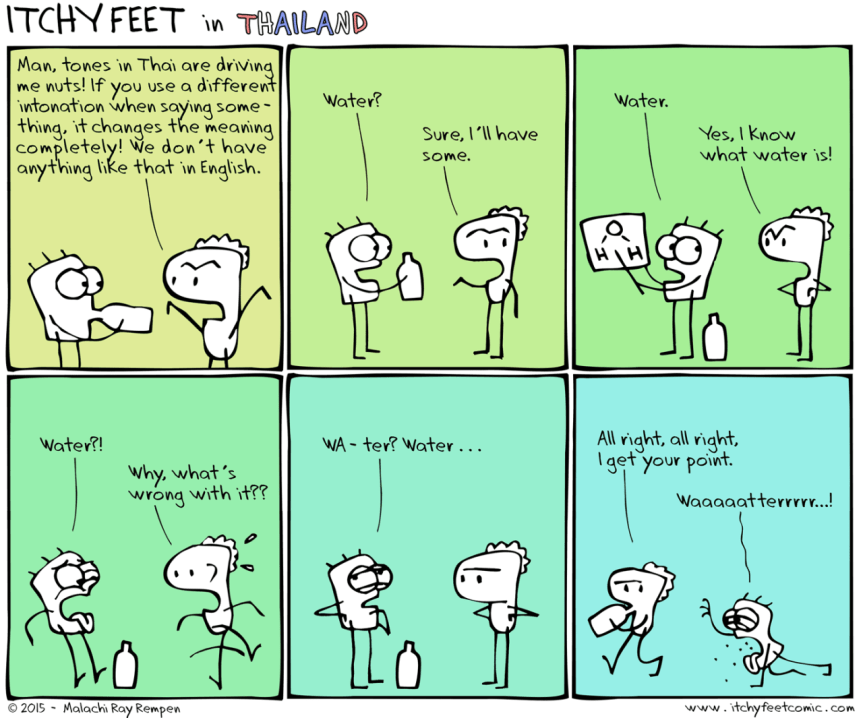
Basic research into prosodic systems. It addresses questions like:
- How are the variations of duration, pitch, and intensity used to express lexical, sentence-level, and pragmatic meanings cross-linguistically?
- How do speakers process prosody and intonation?
- How are stress and accent represented cross-linguistically?
Representative Publications
Ortega-Llebaria,M., and Wu, Zhaohong, (2021). “Chinese-English Speakers’ Perception of Pitch in Their Non-Tonal Language: Reinterpreting English as a Tonal-Like Language”. Language and Speech, DOI. PDF
Ortega-Llebaria, M., Nagao, J. (2020). “Right-edge markers, duration, and intensity cues to narrow focus in Japanese .” Poster presented at the Meeting of the Acoustical Society of America, December 7-11. Link: https://ave20-asa.ipostersessions.com/default.aspx?s=45-08-B7-A6-49-80-31-D2-08-7F-36-38-AC-58-34-1E
Ortega-Llebaria, M., Olson, D., and Tuninetti, A. (2019). “Explaining cross-language asymmetries in prosodic processing: The Cue-Driven Window Length hypothesis.” Language and Speech 62 (4), pp. 701-736. PDF
Wu,Z. and Ortega-Llebaria, M. (2017). “Pitch shape modulates the time course of tone vs. pitch accent processing in Mandarin Chinese.” Journal of the Acoustical Society of America 141 (3),pp. 2263-2276. PDF
3. L2 prosody: perception, production, and mental representations

This line of research investigates the role of the native language prosody in a second language, and the prosody of bilingual speakers. It addresses questions such as:
- How do speakers of tonal and non-tonal languages (e.g., Chinese speakers of English) represent pitch in their bilingual lexicons?
- What is the extent of the stress deafness phenomenon?
- What aspects of L2 prosody are the most difficult to learn and why?
Representative Publications
Ortega-Llebaria, M., Silva, L., Nagao, J. (2023). Macro- and micro-rhythm in L2 English: Exploration and refinement of measures. Proceedings of the International Conference of Phonetic Sciences, Prague, August 7-11 2023. PDF
Ortega-Llebaria, M. (in press). Acquistion of suprasegmental phonology in adult bilingualism. In Mark amengual (Ed.). The Hanbook of bilingual phonology. Cambridge University Press. PDF
Ortega-Llebaria, M. (under revision). L2 Word Stress. The Encyclopedia of Applied Linguistics. John Wiley Co. PDF
Ortega-Llebaria,M.,*Nemoga, M., Presson, N. (2017). “Long-term experience with a tonal language shapes the perception of intonation in English words: How Chinese–English bilinguals perceive “Rose?” vs.“Rose”.”Bilingualism: Language and Cognition, pp. 1-17. PDF
Ortega-Llebaria, M. and Colantoni, L. (2014). “The L2 acquisition of English intonation: form-meaning associations and maintenance of auditory resolution to acoustic cues.” Studies in Second Language Acquisition 36, pp.331-353. PDF
4. Documenting prosody in understudied languages, dialects, and populations
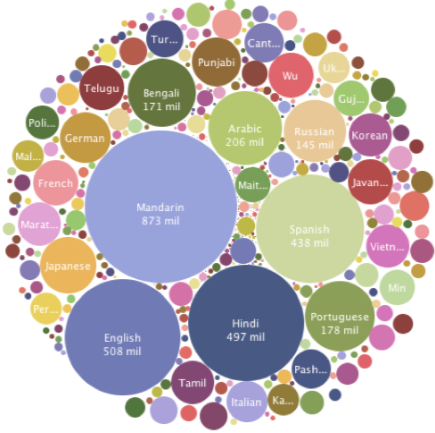
Ideally, an unbiased understanding of speech perception is based in a representative sample of languages and speakers. This line of research contributes to this goal by documenting the prosody and segmental contrasts of understudied languages and populations
Representative Publications
Teran,V. and Ortega-Llebaria,M. (2017). “A description of Tucumán Spanish intonation.” Open Linguistics 3(1), pp. 456-490.
Ortega-Llebaria,M. and Bosch, L. (2015). “Cross-dialectal discrimination in early infancy: A look at prosodic, rhythmic and segmental properties”. In Joaquin Romero and MariaRiera (Eds.), The Phonetics-Phonology Interface. Representations and methodologies.Current Issues in Linguistic Theory. 2015:Amsterdam/Philadelphia, pp. 55-71.
Olson,Daniel and Ortega-Llebaria, M.(2010). “Perceptual relevance of code switching and intonation in creating narrow focus.” In Marta Ortega-Llebaria (Ed.) Selected Proceedings of the 4thConference on Laboratory Approaches to Spanish Phonology, Cascadilla Proceedings Project, Cascadilla Press, Sommerville, MA.,pp. 57-68.
Manolescu,A., Olson, D., Ortega-Llebaria, M.(2009) “Cues to contrastive focus in Romanian.” In M. Vigário, S. Frota and M.J. Freitas. (Eds.). Interactions in Phonetics and Phonology, John Benjamins: Amsterdam/Philadelphia, pp. 71-90.
5. Social, linguistic, and emotional aspects of prosody

Under construction……
 Marta Ortega Llebaria